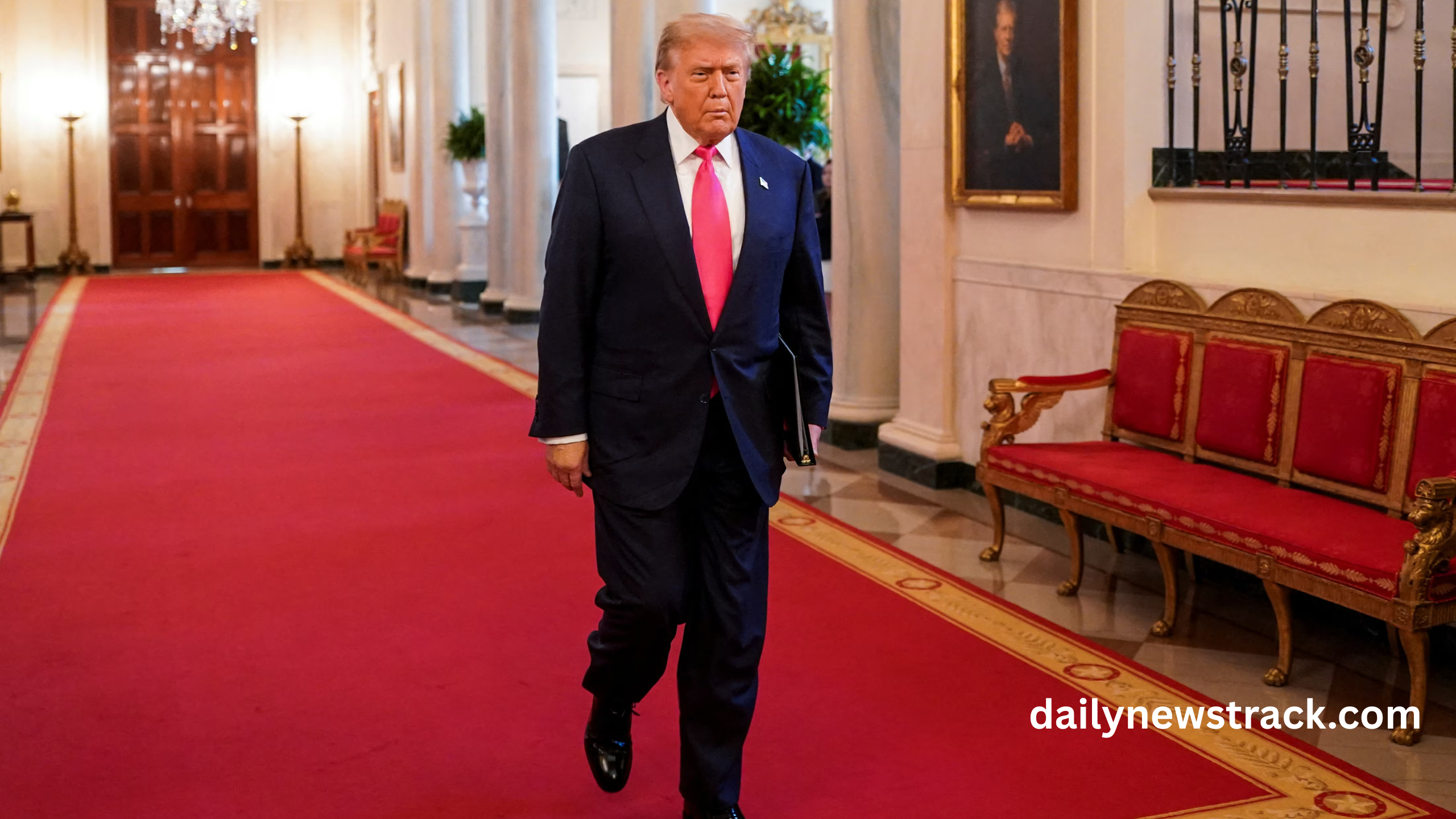
Former President Donald J. Trump has once again cemented his dominance over the Republican Party and national political discourse by orchestrating what he dubbed a “big, beautiful” policy triumph. This development not only strengthens his grip on conservative voters but also sets the tone for a renewed and aggressive political strategy heading into the next presidential election. Whether seen as a savvy maneuver or a controversial power play, Trump’s latest success underscores his continuing influence on American politics, reshaping policy frameworks and political loyalty in his image.
This article explores in detail the implications of Trump’s recent policy triumph, examining its legislative substance, political significance, ideological underpinnings, media reception, public opinion, and broader impact on American governance.
The Policy at the Center of the Triumph
The specific policy that triggered Trump’s declaration of victory revolved around a sweeping economic and immigration package. This legislation, promoted as a dual remedy for the country’s economic challenges and border security concerns, was passed with significant Republican backing. Key elements of the package included substantial tax relief for middle-income families, tightened immigration enforcement measures, and incentives for domestic manufacturing.
Trump hailed the bill as a vindication of his America First agenda, arguing that it protected American workers, restored economic independence, and reasserted national sovereignty. For many of his supporters, the bill represented a return to common-sense governance rooted in patriotism, self-reliance, and traditional values.
The language surrounding the bill, including Trump’s description of it as “big” and “beautiful,” was as politically calculated as the policy itself. It evoked his past slogans and successes, particularly the wall-building narrative and economic wins of his previous term. The branding transformed a dense piece of legislation into a symbol of power and leadership.
GOP Rallying Behind Trump
The success of the policy brought with it a clear message: Trump remains the undisputed leader of the Republican Party. Lawmakers who had been wavering on their alignment with Trump quickly fell in line, recognizing that his base remained energized and unshaken. Public endorsements from high-profile Republicans, including several senators and governors, signaled a coalescence around Trump’s leadership.
This consolidation is not without political calculation. GOP strategists know that the key to recapturing the White House lies in activating the massive Trump voter base while avoiding fractures within the party. Trump’s policy win provided a rallying point, helping to quell internal dissent and project unity.
The shift was especially evident among emerging Republican figures who positioned themselves as Trump allies, using the policy as a platform to show loyalty. They echoed Trump’s rhetoric, praised the bill’s nationalist themes, and pledged to carry forward his agenda.
Media Reactions: Divided and Fierce
As expected, media reactions to the policy win were deeply polarized. Right-leaning outlets such as Fox News, Newsmax, and The Daily Wire lauded the bill as a masterstroke. They praised Trump’s tenacity, leadership, and ability to deliver real results despite opposition from entrenched political forces. Headlines like “Trump Delivers Again” and “America First, Always” dominated conservative news cycles.
Left-leaning media, however, warned of troubling implications. MSNBC, CNN, and The New York Times characterized the policy as a populist overreach, built more on political spectacle than economic substance. Critics claimed that immigration measures were overly harsh and that the tax relief disproportionately benefited red-state demographics while undermining federal programs.
Despite the criticisms, even skeptical analysts acknowledged Trump’s strategic prowess. By winning on a major legislative front, he not only advanced his policy goals but also sent a clear signal to opponents: he remains a formidable force in American politics.
Public Reception and the Trump Base
Among Trump’s base, the policy win was received as a moral and political victory. Rallies across the country celebrated the bill’s passing, often featuring Trump-themed merchandise, chants of “USA,” and renewed calls to “Drain the Swamp.” The sense of accomplishment was palpable.
Polling showed a marked uptick in Trump’s favorability ratings among Republican voters, especially in swing states. The passage of the bill reinvigorated the grassroots, giving local organizers a fresh talking point and energizing voter registration drives.
In contrast, independent and moderate voters displayed mixed feelings. While some appreciated aspects of the economic provisions, others were wary of the bill’s immigration and regulatory components. Democrats, meanwhile, used the moment to mobilize their base by portraying the bill as a step toward authoritarianism.
Reinforcing the America First Doctrine
The policy triumph reaffirms Trump’s commitment to the America First doctrine—a blend of economic nationalism, border control, trade protectionism, and military non-interventionism. Each provision of the bill can be tied back to these core principles.
The economic incentives for domestic manufacturing, for example, are designed to reduce reliance on global supply chains. Trump and his advisors argued that COVID-19 had exposed dangerous dependencies, and that a strong nation should not be at the mercy of foreign markets for essential goods.
Immigration provisions, meanwhile, toughened border controls and accelerated deportation proceedings for undocumented migrants. These measures were framed as a way to secure American jobs, protect public resources, and preserve national identity.
Though controversial, this ideology has a strong emotional and cultural pull for many Americans. It offers a sense of control, belonging, and predictability in an increasingly chaotic world. Trump’s ability to turn these ideas into tangible policy once again underscores his political acumen.
Impact on 2024 and Beyond
Trump’s policy success is more than a legislative milestone—it’s a campaign launchpad. With primaries looming, he now has a concrete achievement to tout, setting himself apart from other contenders. Whether it’s Ron DeSantis, Nikki Haley, or another challenger, Trump’s message is clear: “I win. They talk.”
The timing of the policy win is particularly potent. It allows Trump to re-enter the national stage not just as a former president, but as a political architect with unfinished business. His rallies have grown in size and frequency, and his campaign has begun framing the next election as a battle between globalist decay and patriotic revival.
Moreover, the bill gives Trump leverage in shaping the GOP platform. Candidates running for office will be measured against their support or opposition to his legislation. For Trump, this means greater control—not just over his campaign, but over the party itself.
Legal Troubles and Political Immunity
Trump’s policy win also plays a strategic role in deflecting attention from his ongoing legal troubles. With investigations and court cases looming, Trump’s team is using the legislative victory to shift the narrative from alleged wrongdoing to governance and leadership.
His supporters view legal actions as politically motivated, and the timing of the policy win feeds into that perception. By delivering real-world results, Trump reinforces the idea that he’s being targeted not for crimes, but for success.
This tactic has proven effective in the past. When Trump feels pressure from prosecutors or media scrutiny, he often doubles down on policy action, public appearances, and populist messaging. The recent win follows this pattern, redirecting headlines and fortifying public support.
International Response and Diplomatic Ripples
The global reaction to Trump’s policy win has been mixed. Allies like Hungary and Poland praised the legislation’s nationalist tone, while Western European countries expressed concern over America’s inward turn. Canada and Mexico, in particular, responded cautiously to the immigration provisions, fearing strain on cross-border cooperation.
China and Russia observed the development with interest. Analysts suggested that the bill’s protectionist slant could affect international trade agreements and alter the geopolitical balance. Trump’s emphasis on American manufacturing was seen as a challenge to China’s global economic positioning.
While the immediate international implications are limited, the bill sets the stage for a potential reconfiguration of U.S. foreign policy, should Trump return to power. His first term reshaped global alliances—and another Trump presidency, backed by a reinvigorated nationalist platform, could lead to even more dramatic shifts.
Opposition Strategies and Democratic Pushback
Democrats responded swiftly and sharply to Trump’s policy win. In speeches, press releases, and campaign ads, party leaders accused Trump of using fear-based politics to push divisive legislation. They framed the bill as anti-immigrant, anti-worker, and anti-democratic.
Progressive lawmakers began drafting counter-legislation, targeting what they described as flaws in the economic and immigration components. Civil rights groups launched legal challenges, arguing that certain provisions violated constitutional protections.
At the same time, Democratic strategists acknowledged the need to rethink their messaging. Trump’s success underscored the limitations of purely anti-Trump rhetoric. Going forward, they will likely emphasize policy alternatives, unity, and social equity to recapture the national narrative.
Frequently Asked Questions
What is the “big, beautiful” policy Trump is referring to?
It refers to a major legislative win involving economic reforms and stricter immigration measures, aligning with Trump’s “America First” agenda.
How does this policy strengthen Trump’s political power?
The successful passage demonstrates Trump’s influence in Congress, boosts his popularity among GOP voters, and unites Republican lawmakers under his leadership.
What are the key features of the policy?
It includes middle-class tax relief, incentives for domestic manufacturing, and enhanced border security and immigration enforcement provisions.
How did the Republican Party react to the policy win?
Most Republicans rallied behind Trump, viewing the policy as proof of his continued leadership and ability to deliver on conservative priorities.
How are Democrats responding to the policy?
Democrats criticized the bill as divisive, launching legal and legislative efforts to counter its effects and reframe the public narrative.
What does this mean for the 2024 presidential election?
The policy win gives Trump a powerful campaign message and further cements his status as the frontrunner for the GOP nomination.
How has the media covered this development?
Coverage is sharply divided—conservative outlets praised the win, while liberal media outlets criticized its content and political motivations.
What is the public reaction to the policy?
Trump’s core base supports it enthusiastically, while independents are split and Democrats remain largely opposed.
Does this policy affect international relations?
Yes, especially in terms of trade and border cooperation with neighboring countries like Canada and Mexico, as well as China’s economic ties.
Is Trump facing legal issues while celebrating this policy win?
Yes, Trump is dealing with several legal investigations, but his supporters view the policy win as evidence of political persecution rather than wrongdoing.
Conclusion
Trump’s “big, beautiful” policy win marks more than a legislative achievement—it represents a defining moment in the modern political landscape. With this victory, Trump has reminded the country of his ability to shape policy, sway public opinion, and command loyalty from both politicians and voters.