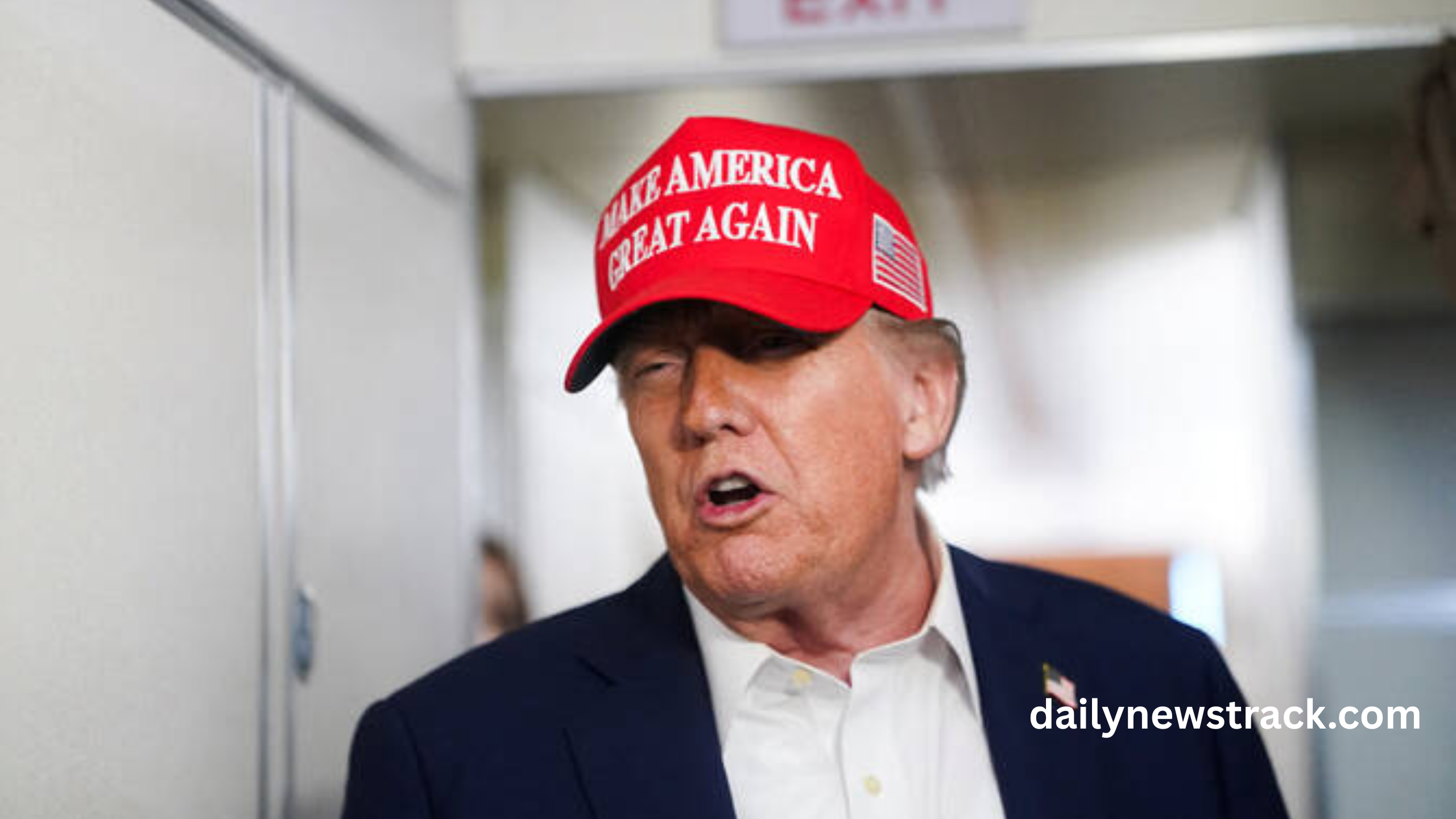
Former President Donald Trump, known for his confrontational approach to global trade during his first term, is once again making headlines. Reports have emerged that Trump, in his bid to reclaim the White House, is preparing to escalate tariff pressures on key international trade partners. This time, his administration-in-waiting is drafting letters to various countries, outlining a new series of tariff rates and demanding revised trade terms.
This article explores the historical context of Trump’s tariff strategy, the rationale behind the proposed changes, potential global reactions, and how it might reshape the international trade landscape.
Trump’s Trade Policy Legacy
During his presidency, Donald Trump reshaped U.S. trade policy with an “America First” philosophy that challenged decades of globalization and multilateral agreements. Central to this policy was the use of tariffs — taxes imposed on imported goods — as leverage in negotiations.
His administration imposed tariffs on Chinese goods, renegotiated NAFTA into the USMCA, and levied tariffs on steel and aluminum imports from close allies such as the EU and Canada. Trump also withdrew the U.S. from the Trans-Pacific Partnership, a major multilateral trade deal designed to counterbalance China’s influence in Asia.
Trump argued that these actions protected American jobs and revived domestic industries. Critics, however, claimed they caused economic uncertainty, raised costs for U.S. consumers and businesses, and weakened relationships with allies.
The New Plan in 2025 — A Preview of What’s to Come
With the possibility of returning to office, Trump and his team are preparing a fresh round of tariff policies designed to exert economic pressure and reshape global trade norms in favor of the United States.
The centerpiece of this strategy involves formal letters being drafted and sent to key U.S. trading partners. These letters reportedly lay out a bold and aggressive tariff structure, aiming to reset the rules of engagement. Trump has suggested instituting a baseline universal tariff on all imported goods, estimated around 10%, while targeting specific countries with far higher rates.
China is once again a key focus, with speculation that imports from Beijing could face tariffs as high as 60%, citing ongoing trade imbalances and concerns about intellectual property theft. Trump’s team argues that this would compel companies to bring manufacturing back to the U.S., bolstering domestic job creation and reducing dependency on foreign supply chains.
These measures are part of a broader “economic sovereignty” framework that reimagines global trade as a series of bilateral, America-first deals rather than participation in multinational agreements.
Global Trade Partners Respond
The global reaction to Trump’s revived tariff agenda has been mixed. Several countries have expressed concern, especially those previously caught in the crossfire of trade tensions during his first term.
China, as expected, is closely watching the developments. Any indication of steep tariffs would likely prompt a strong retaliatory response. Chinese officials have hinted at reciprocal measures, including tariffs on U.S. agricultural goods and restrictions on American tech firms operating in China.
European leaders have voiced apprehension over what they perceive as a move toward trade isolationism. The European Union, already cautious about the future of transatlantic relations, has warned that any sweeping tariffs could violate World Trade Organization (WTO) rules and lead to economic instability.
U.S. neighbors and USMCA partners, Mexico and Canada, are also monitoring the situation. If Trump seeks to rework existing deals or impose new duties on North American goods, it could undermine the hard-fought agreements from his first term.
Emerging economies, including India, Brazil, and Vietnam, may find new opportunities if Trump’s measures drive American companies to diversify away from Chinese suppliers. But these same countries could also become new targets for tariffs if trade deficits rise or Trump perceives them as unfair competitors.
Economic Theories Behind Tariffs
Tariffs are among the oldest economic tools in the playbook of governments. Supporters argue they can protect domestic industries, secure strategic sectors, and provide governments with negotiating leverage.
The Trump team has consistently framed tariffs not just as taxes but as tools for power projection. In this view, trade is no longer a neutral exchange but a geopolitical battleground where national strength is asserted through tough economic tactics.
Critics, however, argue that tariffs create distortions in the market, penalize consumers with higher prices, and often result in retaliatory moves that hurt exporters. Several studies during Trump’s previous term showed that while some industries benefited from protection, the overall economic impact included higher costs and reduced competitiveness for U.S. companies relying on global supply chains.
In essence, Trump’s strategy leans on a nationalist interpretation of economic policy, where sovereignty and self-reliance trump efficiency and interdependence.
Domestic Political Calculations
Tariff policy is also deeply political. Trump’s messaging on trade resonates strongly with parts of the electorate that feel left behind by globalization. In Rust Belt states such as Michigan, Wisconsin, and Pennsylvania — key battlegrounds in any presidential race — promises to bring back factory jobs and punish foreign competitors have proven popular.
By reviving trade wars and presenting himself as a fighter for American workers, Trump positions himself against what he calls the “globalist elite.” He often paints a stark contrast between his muscular trade stance and the more diplomatic, multilateral approach of the Biden administration.
Within Congress, Trump’s tariff talk divides lawmakers. Some Republicans support him, citing the need to protect American interests. Others fear the economic fallout and warn of alienating allies. Democrats have generally been skeptical, although a segment of the party supports fair trade and worker protections.
Regardless of party lines, trade remains a potent wedge issue that Trump uses to his advantage.
Business Community Divided
American businesses are watching these developments closely. While some industries stand to benefit from protectionist policies, others fear disruption.
Manufacturers in sectors such as steel, aluminum, and certain machinery industries have historically welcomed tariffs that shield them from cheaper imports. These companies argue that tariffs level the playing field and allow them to compete fairly.
However, the broader business community, especially import-heavy sectors like retail, electronics, and automotive, remains wary. Tariffs mean higher input costs, which get passed on to consumers. Retailers and trade groups have warned that a return to sweeping tariffs would exacerbate inflationary pressures.
Technology companies, particularly those reliant on Asian manufacturing, fear supply chain upheaval and the potential for retaliatory restrictions on U.S. digital services abroad.
Financial markets, too, respond nervously to tariff threats. During Trump’s first term, trade announcements frequently caused volatility in stock prices, particularly among multinational corporations with exposure to China.
The Role of the World Trade Organization
Trump’s previous actions and current plans again put the WTO in a difficult position. His administration often bypassed or undermined WTO mechanisms, including blocking appointments to the appellate body, effectively paralyzing dispute resolution at one point.
The new tariff strategy may again be challenged as non-compliant with WTO rules. If other nations bring disputes before the organization, a prolonged legal battle could ensue.
There’s also a broader concern about weakening global trade institutions. Critics fear that repeated challenges to WTO norms may erode the credibility of the system, encouraging other countries to act unilaterally. This could spark a breakdown in the cooperative frameworks that have governed trade since World War II.
Trump’s allies argue that international institutions have failed to protect American interests, and bold action is necessary. His opponents warn of long-term damage to the global trading system and diminished U.S. influence abroad.
What This Means for the Global Economy
The implications of Trump’s renewed tariff policy could be profound. If implemented, widespread tariffs could:
- Disrupt global supply chains already under pressure from pandemic-related changes.
- Trigger retaliatory actions that reduce exports and inflame diplomatic tensions.
- Increase the cost of goods for U.S. consumers, contributing to inflation.
- Encourage protectionist policies in other countries, fragmenting the global economy.
- Shift the balance of trade relationships, possibly empowering non-Western alliances.
At the same time, the uncertainty surrounding future U.S. trade policy may deter foreign investment and make companies think twice before expanding globally integrated operations.
Some economists predict that if Trump returns to office with full control of trade policy, the global economy could face a new era of volatility, with implications far beyond the borders of the United States.
Frequently Asked Questions
What is Donald Trump proposing with the new tariff plan?
Donald Trump is proposing a new wave of tariffs on imported goods, including a universal baseline tariff and significantly higher rates for countries like China. He plans to notify trade partners through formal letters.
Why is Trump sending letters to trade partners?
The letters are intended to inform U.S. trading partners of proposed changes in tariff rates and to pressure them into negotiating more favorable trade terms with the United States.
What countries are likely to be affected most by the new tariffs?
China is expected to face the steepest tariffs, but other major trade partners including the European Union, Canada, and Mexico may also be affected.
What is a universal baseline tariff?
A universal baseline tariff is a flat tariff rate applied to all imported goods from all countries. Trump has floated a rate around 10% to level the playing field for domestic producers.
How does this compare to Trump’s first term trade policies?
This new plan builds on Trump’s first-term policies but appears more expansive, with broader application and potentially higher rates.
How have other countries responded to the proposed tariffs?
Reactions range from concern to outright opposition. Some nations, especially China and the EU, have warned of potential retaliation and challenges at the World Trade Organization (WTO).
Will the new tariffs impact American consumers?
Yes. Higher tariffs on imports often result in increased costs for businesses and consumers, particularly in sectors like electronics, clothing, and automotive.
What industries support Trump’s tariff proposals?
Some domestic manufacturing sectors, like steel, aluminum, and certain textiles, support tariffs as a way to protect against foreign competition.
What industries oppose the proposed tariff hikes?
Retailers, tech firms, automotive companies, and other industries reliant on global supply chains generally oppose broad tariffs due to increased costs and supply disruptions.
Are these tariffs legal under international trade rules?
Many experts believe sweeping unilateral tariffs could violate WTO rules. Trump’s previous tariffs have faced legal challenges, and future ones could as well.
Could this spark a new global trade war?
If implemented aggressively, yes. Other countries may retaliate with tariffs of their own, potentially leading to a breakdown in global trade cooperation.
How would this affect the U.S. economy?
The impact could be mixed. Some domestic jobs might be protected, but costs for businesses and consumers would likely rise. It could also lead to inflation and supply chain instability.
What role does the World Trade Organization play in this situation?
The WTO provides a framework for resolving trade disputes. If Trump’s tariffs are challenged, the WTO could become a central player in adjudicating the legality of the measures.
Is this policy popular among American voters?
Among Trump’s political base, particularly in manufacturing-heavy regions, the policy is popular. However, many economists and moderate voters are concerned about the economic downsides.
Conclusion
Trump’s decision to escalate tariff pressure and notify trade partners via formal letters marks a bold reentry into global economic debates. Whether these moves will strengthen America’s hand or trigger new conflicts remains to be seen.