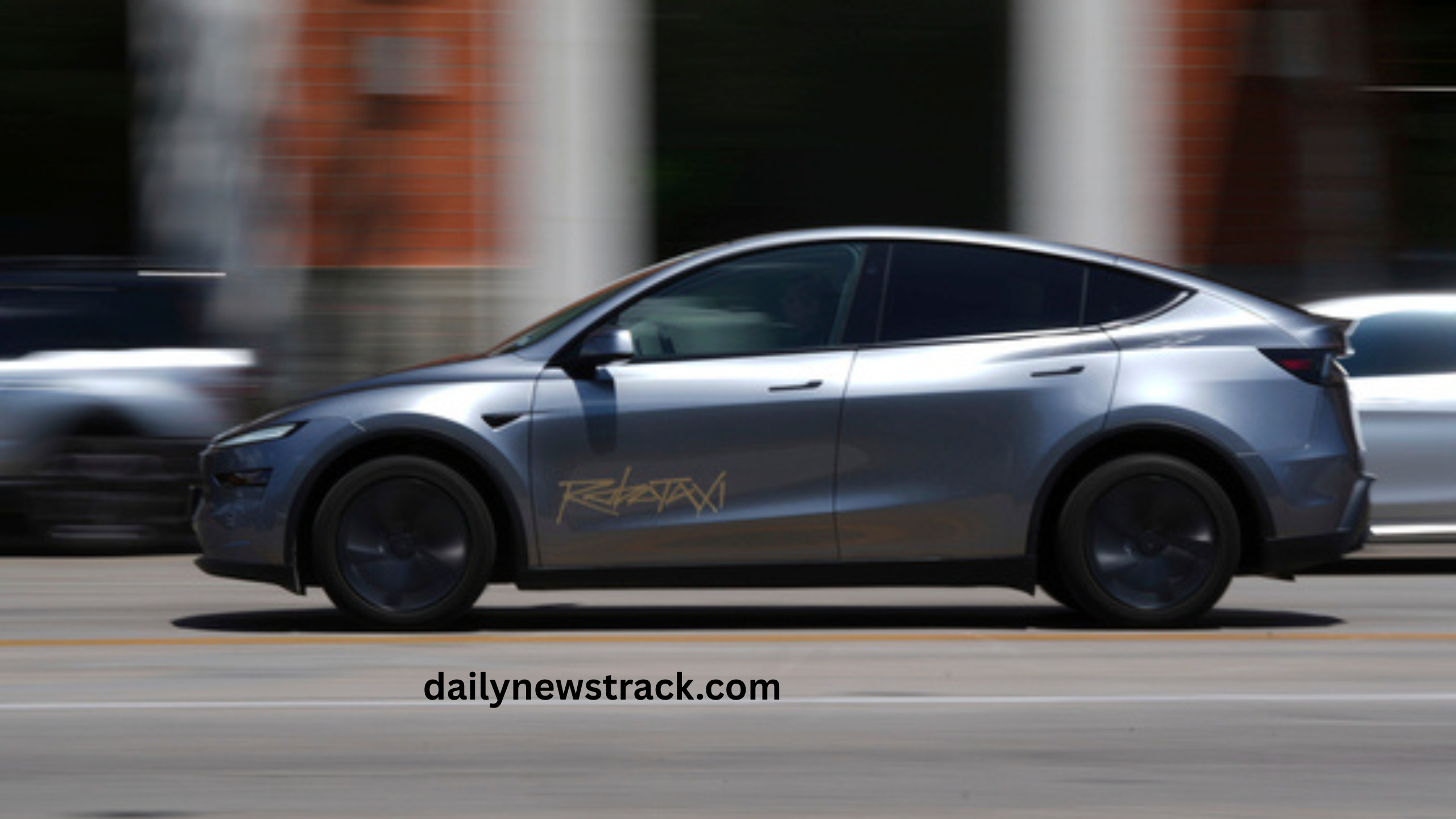
Tesla’s mission to redefine transportation took a significant leap forward with the introduction of its upcoming robotaxi fleet. These all-electric autonomous vehicles are set to change urban mobility, reducing dependency on human drivers. Although Tesla’s Full Self-Driving (FSD) software has progressed considerably, true autonomy remains a work in progress. Until then, Tesla plans to incorporate remote control capabilities, allowing human supervisors to step in when necessary.
This article explores how Tesla envisions remote-controlled robotaxis, the technologies behind the system, operational strategies, and the limitations that could determine the success or delay of this ambitious project.
Tesla’s Robotaxi Dream
Tesla has long promoted a vision of transportation where self-driving cars become the norm. With Elon Musk’s leadership, the company foresees a fleet of autonomous Teslas roaming city streets, available to summon via a mobile app, offering a cheaper, cleaner alternative to conventional ride-hailing.
Tesla’s Goals with Robotaxis
- Enable convenient and cost-effective travel for consumers
- Allow Tesla owners to lease their vehicles into the network when not in use
- Provide a scalable alternative to private car ownership
- Build a new stream of recurring revenue through service-based mobility
However, Tesla faces multiple roadblocks to achieving full vehicle autonomy. To bridge the gap between today’s driver-assisted technology and tomorrow’s fully autonomous systems, Tesla is integrating remote control mechanisms for safety and operational efficiency.
Why Remote Control Is Necessary
Despite strong advancements in FSD, Tesla vehicles still struggle in unstructured or unpredictable environments. Construction zones, emergency scenes, or confusing intersections remain a challenge. To address these edge cases, Tesla is turning to a hybrid approach that blends autonomous driving with remote human intervention.
Benefits of Remote Control for Robotaxis
- Provides a fallback option during software uncertainty
- Offers real-time decision-making support in emergencies
- Enhances safety in complex environments
- Enables human assistance for unique passenger needs or technical errors
By integrating remote control, Tesla adds a layer of oversight that boosts public and regulatory confidence in its autonomous ride-hailing model.
How Tesla’s Remote Control System Works
Tesla’s remote control strategy involves a highly sophisticated integration of hardware, software, and connectivity. It allows human operators to oversee vehicles from remote operation centers and, if needed, take over driving responsibilities.
Autonomous Vehicle Technology
Tesla’s vehicles rely primarily on:
- Multiple onboard cameras providing panoramic vision
- Neural networks trained on massive datasets to interpret driving environments
- Tesla’s proprietary FSD chip to process visual data in real time
- Ultrasonics or radar (optional) for close-range object detection
These systems aim to mimic the senses and reactions of human drivers using only camera-based perception.
Real-Time Connectivity and Telemetry
Tesla’s existing fleet already shares data with the company for diagnostics and updates. For remote control, Tesla must enhance:
- High-speed data transmission through 5G or satellite networks
- Live video streaming from the vehicle to Tesla’s operations center
- Two-way control channels for safe, real-time decision-making
A smooth data flow between the vehicle and the operations center is essential to enable human control with minimal delay.
Remote Operations Center
Tesla is expected to operate centralized command hubs staffed with trained professionals who:
- Monitor active robotaxis through live feeds
- Analyze vehicle telemetry and environmental data
- Intervene manually when needed using a remote driving interface
These centers could operate similarly to air traffic control rooms, coordinating hundreds or thousands of robotaxis simultaneously.
Operational Model for Tesla’s Robotaxis
Tesla’s robotaxi model relies on autonomous navigation for the majority of trips, with humans stepping in during exceptional situations. The expected operational flow might include:
- Passengers summon a robotaxi via the Tesla app
- The vehicle navigates autonomously to the pick-up location
- During the ride, if the vehicle encounters confusion or an obstacle, it may pause
- A signal is sent to the remote operations team, who evaluate the scenario via video feeds
- A human operator can take temporary control or guide the vehicle safely through the issue
- After resolution, the car returns to autonomous mode and completes the ride
This hybrid approach keeps the system largely autonomous while maintaining a safety net.
Technological Challenges Tesla Faces
While remote control can offer a temporary solution, several technical obstacles must be overcome for widespread success.
Latency and Network Reliability
Control commands must be transmitted instantly. Even slight delays can cause critical errors. Maintaining reliable, fast internet connections across urban and rural areas remains a major hurdle.
Bandwidth and Video Transmission
Streaming live, high-resolution video from thousands of vehicles is data-intensive. Tesla must build infrastructure capable of handling this load without compromising speed.
Sensor Limitations
Tesla relies solely on cameras, unlike competitors that use lidar and radar. Poor weather, dirty lenses, or low light can hinder perception and may increase reliance on remote human support.
System Scalability
Managing remote oversight for a growing fleet of robotaxis will require massive computing power and a large team of operators. Scaling operations while maintaining response times and service quality will be a balancing act.
Legal and Regulatory Roadblocks
Tesla’s remote control plans also face significant legal and regulatory complications.
Jurisdictional Variability
Each city or country may have its own laws regarding autonomous vehicles and remote driving. Tesla must navigate a fragmented legal landscape, gaining approval in each area before operating robotaxis.
Liability and Insurance
If a crash occurs while a remote operator is in control, legal responsibility could fall on Tesla, the vehicle owner, or the operator. These complexities need to be addressed with new insurance models.
Licensing and Operator Certification
Some regions may require that remote operators hold driving licenses or undergo special training. Tesla must design onboarding programs and compliance mechanisms to meet such requirements.
Ethical and Social Concerns
Tesla’s remote control capabilities also raise important ethical questions and societal concerns.
Passenger Privacy
Constant video streaming from vehicle cabins and surroundings can raise serious privacy issues. Tesla will need strict data governance and transparency about how data is stored, used, and protected.
Decision-Making Dilemmas
Remote operators may face tough ethical decisions in split-second situations, such as choosing between two bad outcomes. These scenarios require clear protocols and perhaps AI assistance in guiding ethical choices.
Job Displacement
The rise of robotaxis threatens employment in the traditional ride-hailing and taxi industries. As Tesla scales its services, displaced workers may seek compensation or retraining opportunities.
How Tesla Compares to Competitors
Tesla isn’t alone in the robotaxi race. Comparing its approach to other players sheds light on industry dynamics.
Waymo
Backed by Google’s parent company, Waymo uses lidar and radar alongside cameras. It runs a commercial robotaxi service in select U.S. cities with geofenced operations. While it also employs remote monitoring, it avoids direct remote control for liability reasons.
Cruise
Owned by General Motors, Cruise has faced recent setbacks due to safety incidents. Cruise uses a layered sensor strategy and remote operators but must now regain public trust and regulatory approval.
Zoox
Owned by Amazon, Zoox builds its own bidirectional autonomous vehicles and places emphasis on passenger comfort. It leans more on autonomy than remote control, though it still requires human oversight in limited scenarios.
Tesla’s reliance on visual perception and its vertically integrated vehicle manufacturing give it a unique position, but its lack of lidar and full autonomy certification keeps it behind some peers in certain areas.
Infrastructure and Investment Needs
Deploying a global robotaxi network with remote control capacity demands massive investment.
Network Infrastructure
Tesla must invest in cellular networks, satellite access, and possibly dedicated vehicle-to-cloud communication systems to support global operations.
Command Centers
Building and staffing remote operation hubs across regions is labor- and cost-intensive. Tesla must determine how many centers are needed per country or region.
Data Security
Remote control systems are a tempting target for hackers. Tesla must implement strong cybersecurity measures, including encryption, anomaly detection, and physical access control to safeguard operations.
Public Trust and Adoption
The success of Tesla’s robotaxi service depends heavily on consumer trust. Remote control is a double-edged sword—it can build confidence in safety but also raise concerns about surveillance and control.
Building Trust
Tesla must educate the public about how remote control enhances safety. Offering transparency about interventions, success rates, and oversight mechanisms can build credibility.
User Experience
Passengers must feel safe and respected. A seamless ride experience, clear app interfaces, and responsive support will be critical.
Looking Ahead: The Road to Autonomy
Tesla’s robotaxi journey is far from over. Remote control is an important stepping stone toward achieving full autonomy but not a permanent solution. Future advancements in neural networks, edge computing, and self-learning AI could reduce the need for human intervention.
Tesla’s strategy may evolve in phases:
- Initial launches in well-mapped urban zones with heavy remote operator involvement
- Gradual expansion into suburban and mixed-use areas
- Eventual rollout of nearly autonomous robotaxis needing minimal human support
Frequently Asked Questions
Why does Tesla need remote control for its robotaxis?
Tesla uses remote control as a safety backup for situations where its Full Self-Driving (FSD) software may struggle—such as construction zones, emergency scenes, or confusing road layouts. Remote human operators can step in when the AI cannot handle the scenario safely.
How will Tesla remotely control its robotaxis?
Tesla plans to use high-speed data networks like 5G or satellite, live camera feeds, and command centers where human operators can view vehicle surroundings in real time and intervene when necessary by controlling the car remotely.
Will Tesla operators drive the robotaxi like a video game?
Not exactly. Human operators won’t control every movement constantly but will step in to assist with decisions, guide the car through complex situations, or remotely drive short segments if needed.
Is Tesla’s Full Self-Driving truly autonomous?
Not yet. Tesla’s FSD system is considered semi-autonomous and still requires human supervision. Remote control is intended as a transitional solution until full autonomy can be achieved.
What happens if there’s a network outage during remote control?
In the event of a connectivity failure, Tesla vehicles are expected to safely stop and wait for either the signal to return or for assistance to arrive. Fail-safe protocols will be built in to ensure passenger safety.
How does Tesla protect against hacking of its remote system?
Tesla is expected to implement encrypted data channels, secure authentication methods, and continuous cybersecurity monitoring to protect the remote control infrastructure from cyberattacks.
Will passengers know when a human is remotely driving the robotaxi?
Most likely, yes. Tesla may include in-app notifications or audio-visual indicators inside the vehicle to inform passengers when a human operator has taken control.
How does Tesla’s approach compare to other companies?
Tesla relies primarily on vision-based AI and remote control backup, while competitors like Waymo or Cruise use additional sensors like lidar and operate more within geofenced areas. Tesla’s model is designed to be more scalable and eventually fully autonomous.
Conclusion
Tesla’s plan to remotely control robotaxis is both innovative and necessary. It addresses current technological limits in full autonomy by adding a layer of human safety and oversight. The remote control model could be the bridge between today’s semi-autonomous capabilities and tomorrow’s driverless future.