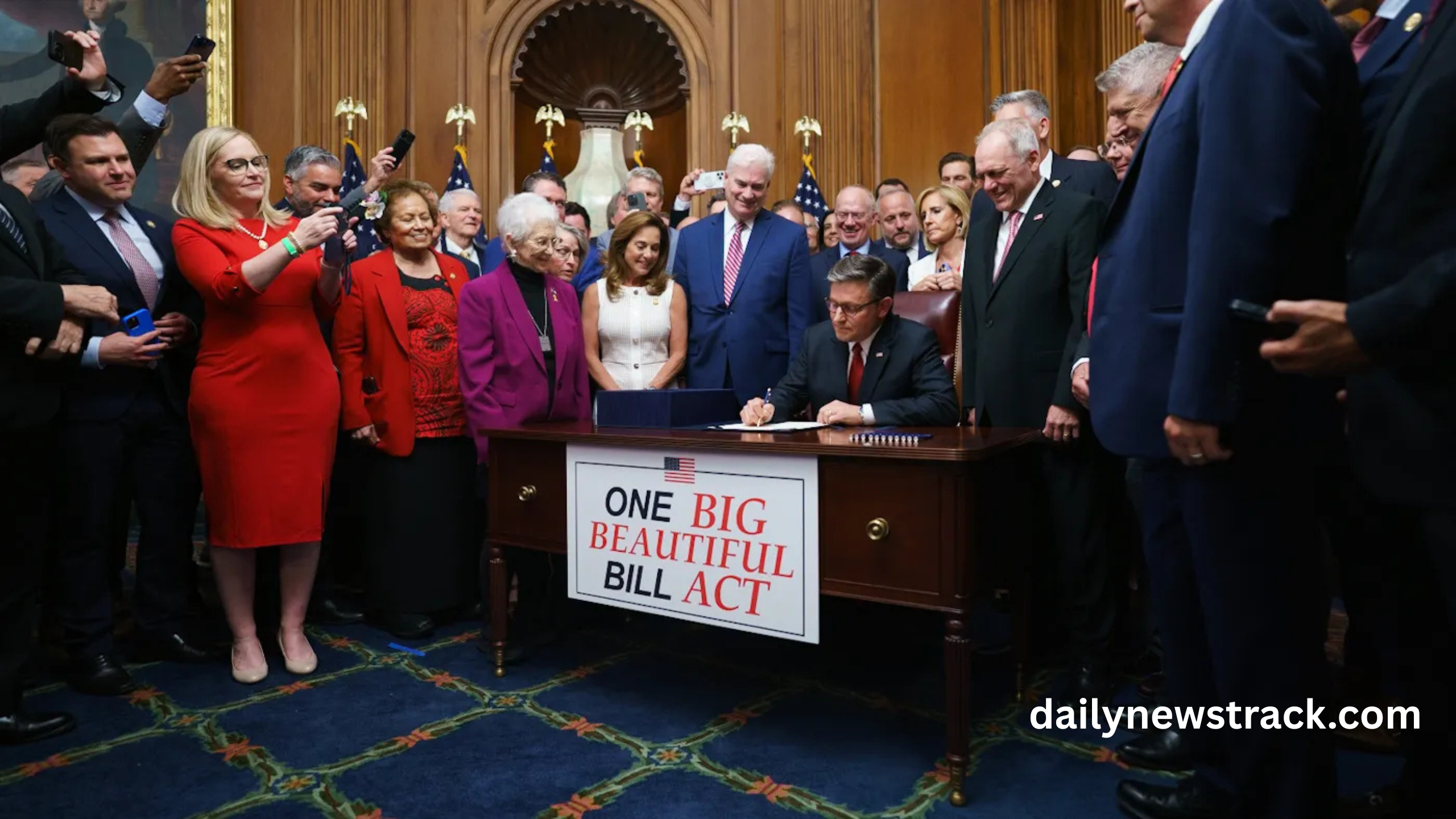
In a powerful demonstration of Republican unity and Trump-era resurgence, the U.S. House of Representatives passed what Donald Trump has proudly called a “big, beautiful bill.” This legislative triumph marks a significant achievement not just for the GOP, but also for Trump’s enduring political influence. Heralded as a blueprint for America’s conservative future, the bill spans wide-reaching policy areas including immigration, infrastructure, economic revitalization, and national security.
This comprehensive article delves into the origins of the bill, its political and legislative journey, key policy provisions, partisan reactions, and what this means for both Trump’s legacy and the future of American governance.
The Roots of the Bill
The inception of the bill can be traced back to the ideological roots of Trump’s first term in office. Promising strong borders, thriving American industries, and a reinvigorated national pride, this legislation was designed to capture the essence of the “America First” agenda. Trump, although no longer in the White House, remained a driving force behind the policy’s development through ongoing influence within the Republican party.
Policy advisors aligned with Trump’s vision worked closely with GOP lawmakers to draft a bill that could unite conservative hardliners and moderate Republicans alike. Their goal was to present a unified front in both the messaging and structure of the legislation, giving Trump supporters a legislative symbol of revival.
Legislative Journey in the House
The path to passage was strategically plotted. After weeks of negotiation and closed-door meetings, the bill was introduced with strong support from Republican leadership. With the House under GOP control, the margin for error was slim but manageable. As expected, the debate on the floor grew heated, with Democrats criticizing the bill as regressive and overly partisan, while Republicans praised it as visionary and necessary.
Ultimately, the vote succeeded with nearly all Republicans supporting it and only a few defectors. The passage was met with cheers from Trump loyalists and conservative media outlets, who framed the event as a signal of Trump’s continued dominance in shaping the Republican legislative agenda.
Immigration and Border Security Highlights
Immigration reform was one of the most anticipated features of the bill. Building on the rhetoric and policies of Trump’s presidency, this portion of the bill allocated substantial funding toward enhancing border infrastructure and staffing. Provisions included the expansion of border walls, increased surveillance technologies, and streamlined processes for deportation and asylum evaluations.
Supporters argued that these measures were critical to national sovereignty and public safety. Critics, however, warned that the proposals could lead to human rights violations and international legal challenges. The bill also revived debates around sanctuary cities, with provisions to penalize jurisdictions that refuse to cooperate with federal immigration enforcement.
Economic and Infrastructure Overhaul
Another central theme was economic empowerment through domestic manufacturing and trade recalibration. The bill included robust incentives for businesses that committed to American-made products and job creation. Small business tax breaks, grants for industrial development, and reshoring bonuses were all built into the legislation.
The infrastructure provisions emphasized road repair, bridge modernization, and revitalization of rural areas—echoing promises made during Trump’s 2016 and 2020 campaigns. The inclusion of these measures was also a tactical play to attract broader public support, particularly from regions that have long suffered from industrial decline.
Law and Order Components
Law and order remain a cornerstone of Trump’s ideological base, and this bill reinforced that principle. Among the included reforms were funding increases for police departments, enhancements to federal crime databases, and stiffer penalties for violent crimes.
In addition, the legislation sought to address public safety through controversial measures such as greater federal authority to respond to civil unrest and new rules governing protests near federal buildings. Opponents argued that this portion of the bill infringed on civil liberties, while supporters framed it as necessary to restore respect for law enforcement and public order.
Healthcare and Social Program Changes
Less publicized but equally impactful were changes to social welfare and healthcare programs. The bill included reforms designed to reduce federal spending on social services by tightening eligibility requirements and promoting work-based assistance models.
While the GOP promoted these changes as fiscally responsible, advocacy groups criticized them for potentially cutting off essential support to vulnerable populations. Still, supporters argued that the long-term goal was to foster independence rather than dependence among low-income communities.
Environmental Deregulation and Energy Provisions
The bill also reflected Trump’s pro-energy stance by including deregulation measures aimed at boosting fossil fuel industries. Provisions included reduced permitting timelines for oil and gas projects, expanded drilling opportunities on federal lands, and the rollback of certain environmental protections.
Conservative lawmakers argued that these actions would lead to greater energy independence and job growth. Environmentalists, on the other hand, labeled the changes as catastrophic, warning of long-term damage to ecosystems and the climate.
The Political Symbolism
Beyond the policy details, the passage of this bill was deeply symbolic. It served as a rallying cry for Trump’s supporters and a tangible sign of his enduring influence over the Republican Party. The legislation’s language, branding, and framing were all infused with Trump’s characteristic boldness and style.
It also signaled a potential roadmap for Trump’s re-election ambitions or for successors carrying his banner. With the 2026 midterms approaching, many GOP candidates are expected to run on the promise of expanding or defending this legislation.
Democratic Opposition and National Reaction
Predictably, Democrats unified in opposition to the bill, labeling it extreme and dangerous. Party leaders criticized the legislation for being rushed, ideologically narrow, and dismissive of minority rights and economic equity.
Civil rights groups, environmental organizations, and labor unions mobilized protests and social campaigns in response. Meanwhile, conservative media declared the bill a legislative renaissance, reviving comparisons to the early days of the Trump presidency.
Public reaction was sharply divided along partisan lines. Supporters praised the bill as a bold return to leadership and clarity, while opponents called it a regression into authoritarian tendencies.
Legal and Constitutional Challenges Ahead
With its sweeping scope, the bill is expected to face significant legal scrutiny. Already, advocacy groups are preparing lawsuits aimed at blocking various provisions, particularly those related to immigration and protest regulations.
Legal analysts have suggested that several parts of the bill could run afoul of constitutional protections or existing federal statutes. This means that while the bill may have passed the House, its implementation is far from guaranteed and could be slowed or dismantled in the courts.
What It Means for Trump’s Political Future
The passage of the bill has major implications for Trump’s political future. It not only strengthens his influence within the GOP but also positions him as the architect of modern Republican policy. In an election cycle where many candidates are seeking his endorsement, this legislative success bolsters Trump’s claim to leadership.
Furthermore, it provides tangible proof of what Trump loyalists can accomplish when united. It may also complicate the ambitions of rival conservatives who seek to distance themselves from Trump’s legacy while still appealing to the base.
A Precedent for Future Legislation
The bill sets a precedent in both style and substance for future GOP legislation. Its bold language, sweeping vision, and unapologetically Trumpian tone suggest a new model for Republican lawmaking—one that leans into cultural conservatism, economic nationalism, and institutional reform.
If the bill survives legal and political challenges, it could become the foundation for a broader legislative agenda that reshapes the national landscape over the next decade.
Frequently Asked Questions
What is the ‘Big, Beautiful Bill’?
It is a wide-ranging legislative package passed by the U.S. House of Representatives, strongly supported by Donald Trump and his allies. The bill covers immigration, economic policy, law enforcement, infrastructure, and energy deregulation.
Why is it called the ‘Big, Beautiful Bill’?
The name was coined by former President Trump to emphasize the bill’s comprehensive scope and alignment with his “America First” policy agenda.
What are the key features of the bill?
Major components include increased border security funding, small business tax incentives, law-and-order policies, environmental deregulation, and pro-energy development measures.
Who supported the bill?
It was backed almost entirely by Republican lawmakers in the House, especially those aligned with the MAGA movement and Trump’s post-presidency political base.
What is the Democratic response to the bill?
Democrats criticized the bill as extreme and divisive, arguing it undermines civil rights, environmental protections, and social welfare programs.
Will the bill pass in the Senate?
The bill faces tougher odds in the Senate, especially if Democrats or moderate Republicans oppose key provisions. Its fate will likely depend on bipartisan negotiations or amendments.
How does this bill affect Trump’s political influence?
It significantly strengthens Trump’s influence, showing his continued control over the GOP’s legislative agenda and solidifying his role ahead of future elections.
Are there legal challenges expected?
Yes, multiple advocacy and legal groups are preparing lawsuits, particularly against the bill’s immigration and protest-related clauses, claiming constitutional violations.
How does the public view the bill?
Public opinion is sharply divided. Trump supporters see it as a needed course correction, while critics view it as regressive and potentially harmful to democratic norms.
What happens next?
The bill moves to the Senate for debate. Simultaneously, legal reviews and public campaigns for and against the bill are intensifying.
Conclusion
The House’s approval of the “big, beautiful bill” represents more than a legislative success; it is a political landmark. It underscores the strength of Trump’s ongoing influence, redefines the Republican Party’s policy agenda, and lays the groundwork for battles yet to come in the Senate, courts, and at the ballot box.