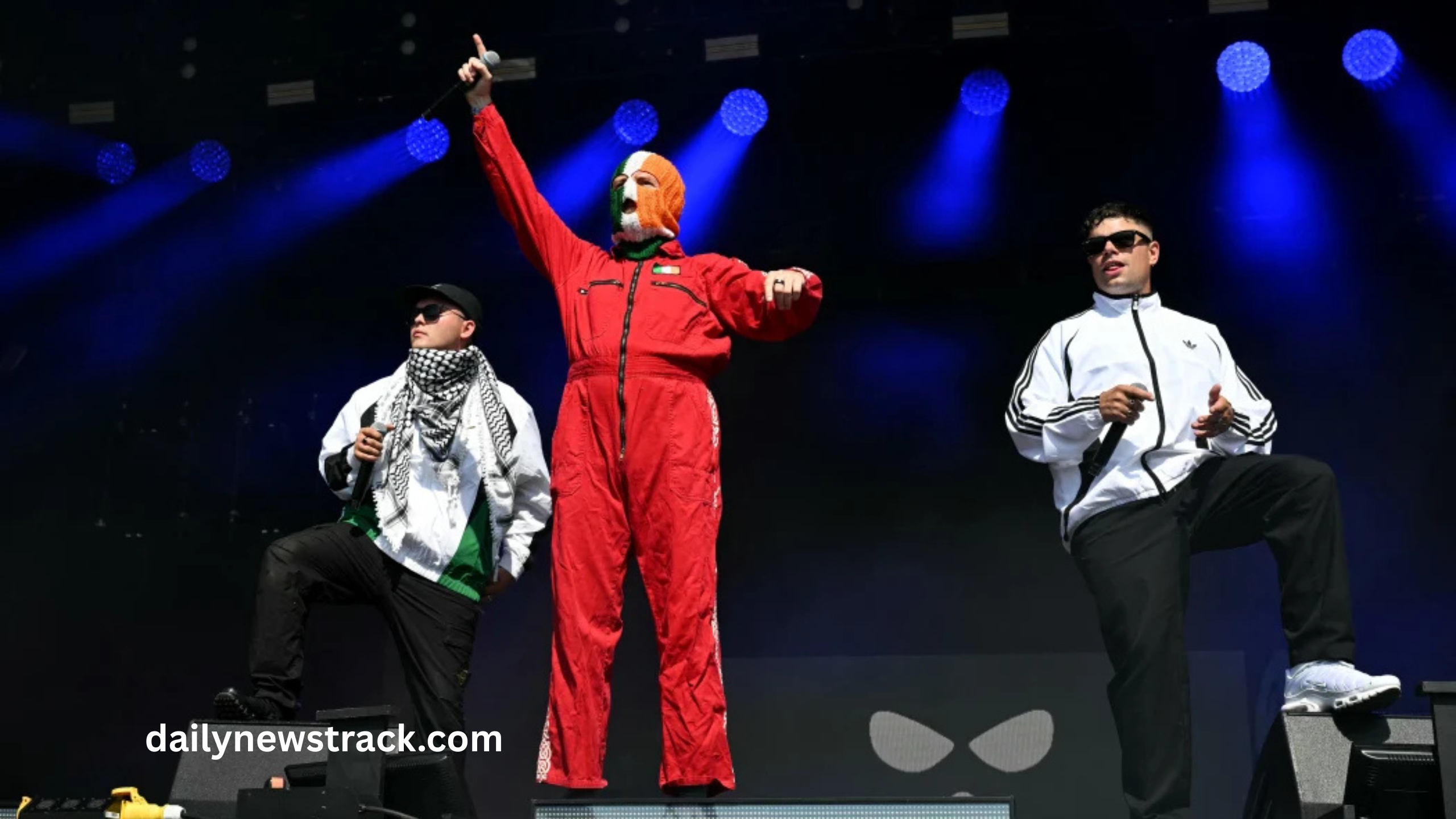
Glastonbury Festival has long been a beacon of artistic expression and political activism. Over the years, this iconic event has become known not just for its legendary musical performances but also for its ability to serve as a cultural barometer, reflecting the mood of the people. In 2025, the festival once again made headlines—not just for the music, but for a powerful political statement. The Irish hip-hop trio Kneecap, known for their rebellious spirit and unapologetic activism, led a chant criticizing UK Labour leader Keir Starmer, sparking debate and commanding national media attention.
This incident is about more than just one chant at one festival. It speaks to larger political tensions, the role of music in activism, and the increasingly fraught relationship between youth culture and establishment politics. In this comprehensive article, we’ll explore who Kneecap are, what led to their Glastonbury moment, the reaction it triggered, and what it all says about the state of British and Irish politics in 2025.
Who Are Kneecap?
Formed in 2017, Kneecap consists of three members: Mo Chara, Móglaí Bap, and DJ Próvaí. Hailing from Belfast, they rap in both Irish and English, blending hard-hitting beats with sharp political commentary. Their music often touches on themes such as Irish republicanism, anti-establishment views, anti-imperialism, and working-class struggle.
Their use of the Irish language isn’t just artistic—it’s political. In a divided Northern Ireland where cultural identity is closely tied to political ideology, Kneecap’s embrace of the Irish language stands as a declaration of pride and resistance. They are unapologetically pro-Irish unity and frequently challenge the status quo through both lyrics and public appearances.
Despite—or perhaps because of—their controversial stance, Kneecap have cultivated a dedicated fan base. They have become symbols of youthful rebellion, challenging both British authority and moderate Irish nationalism, and offering a raw, unfiltered voice that resonates with many disillusioned by mainstream politics.
Glastonbury: A Platform for Protest
The Glastonbury Festival, held annually at Worthy Farm in Somerset, England, is one of the world’s most famous music festivals. It’s also historically a site of protest and political messaging. From anti-war demonstrations to climate activism, Glastonbury has hosted a wide range of dissenting voices over the years.
In 2025, the festival featured an eclectic mix of acts. But among them, Kneecap’s performance stood out not just for its energy, but for its confrontational message. During their set, the trio led the crowd in a chant that took direct aim at Labour Party leader Keir Starmer, with the now-infamous call of:
“F* Keir Starmer!”**
The chant, captured on numerous phones and quickly circulated on social media, sparked immediate controversy. But for those familiar with Kneecap’s brand of politics, it came as no surprise.
Why Keir Starmer?
To understand why Kneecap—and many others—have taken issue with Keir Starmer, we need to look at his political trajectory.
Since becoming Labour leader in 2020, Starmer has attempted to steer the party back toward the political centre. His tenure has been defined by a conscious departure from the left-wing agenda championed by former leader Jeremy Corbyn. While this strategy has improved Labour’s electoral chances, it has alienated many young voters and progressives who feel Starmer has compromised on key principles, including:
- Palestine and Gaza: Starmer’s perceived neutrality or pro-Israel stance during the 2024 Gaza conflict drew criticism from left-wing activists.
- Brexit: While not a hard-Brexiteer, Starmer’s refusal to commit to rejoining the EU angered many Remainers.
- Unionism vs. Irish Nationalism: His rhetoric on maintaining the union of the UK, particularly in the context of Scotland and Northern Ireland, is seen as dismissive by Irish republicans.
- Youth and Protest Movements: Starmer has consistently distanced Labour from movements like Extinction Rebellion and Black Lives Matter, positioning himself as a “serious” leader for a “serious” time.
For a group like Kneecap—whose identity is rooted in anti-colonial sentiment and working-class struggle—Starmer represents everything they oppose: moderation, appeasement, and establishment politics.
The Chant Heard Across the UK
The chant wasn’t just a passing moment—it became a viral sensation. Videos of the crowd chanting along with Kneecap were shared widely across platforms like TikTok, Instagram, and Twitter (now known as X). Hashtags such as #FStarmer, #Kneecap, and #Glastonbury2025 trended for days.
Journalists, political commentators, and musicians weighed in. Some condemned the chant as “irresponsible” or “juvenile.” Others defended it as a legitimate form of political protest.
Labour Party supporters expressed concern that such public opposition from youth voices could damage Labour’s electoral prospects, especially among younger voters who are increasingly influenced by cultural figures rather than traditional political channels.
But Kneecap were unrepentant. In interviews following the performance, they doubled down, saying they had “no interest in flattering politicians who betray working people.”
Music and Political Expression
Kneecap’s actions fall into a long tradition of musicians using their platforms to speak truth to power.
- In the 1960s, artists like Bob Dylan and Joan Baez became synonymous with the civil rights and anti-war movements.
- In the 1980s, punk rock and hip-hop emerged as voices of disaffected youth, criticizing police brutality, inequality, and systemic racism.
- More recently, artists like Kendrick Lamar, Stormzy, and Billie Eilish have taken stands on everything from racism to climate change.
In this tradition, Kneecap stand out not just for their politics, but for their Irish republican identity, which is rare in mainstream music. Their messaging is radical, sometimes confrontational, but always deeply rooted in the historical context of Irish struggle and working-class resistance.
Reaction in Ireland and Northern Ireland
In Ireland and Northern Ireland, reactions to the chant were especially mixed.
- Unionist politicians condemned the chant, accusing Kneecap of stirring up division.
- Sinn Féin members, while not officially endorsing the chant, expressed support for the group’s right to protest.
- Young people, especially in the Republic of Ireland, overwhelmingly backed Kneecap on social media, praising their boldness and authenticity.
Interestingly, even some moderate Irish voters who don’t share Kneecap’s radical politics found themselves nodding along. To many, the chant symbolized a growing frustration not just with Starmer, but with a political class that seems out of touch with younger generations.
Broader Implications for Keir Starmer and Labour
While one chant at a music festival may seem trivial, the political implications are deeper.
Starmer’s Labour Party has consistently polled well in recent years, especially compared to the crisis-ridden Conservative Party. But among younger voters, support is more fragile. The perception that Starmer is “too cautious,” “uninspiring,” or “unwilling to take risks” is pervasive.
Kneecap’s chant may not change elections, but it amplifies existing doubts. It adds to a cultural narrative in which Starmer is viewed as disconnected from the passion and demands of a younger, more progressive electorate.
For Labour strategists, this is a red flag. They risk losing a generation of voters to political apathy—or worse, to parties and movements that reject parliamentary politics altogether.
A Cultural Moment
Kneecap’s chant joins a list of memorable Glastonbury political moments:
- Jeremy Corbyn’s appearance in 2017, when he received a hero’s welcome and gave an impassioned speech on social justice.
- Stormzy’s 2019 headline performance, which featured powerful imagery about racial inequality and prison reform.
- Greta Thunberg’s climate message in 2022, urging young people to hold leaders accountable.
These moments matter because they reach audiences that politics often doesn’t. Music is emotional, unfiltered, and universal. And when an artist like Kneecap leads a crowd in protest, it’s not just a political act—it’s a cultural declaration.
The Future of Protest Music
Kneecap’s rise is part of a broader revival of protest music in both Ireland and the UK. As political crises mount—from climate collapse to housing shortages to geopolitical instability—young people are turning to music not just for entertainment, but for meaning, identity, and resistance.
In this environment, artists who are willing to take risks and speak boldly, like Kneecap, have a unique opportunity to shape public discourse. Their Glastonbury moment may inspire others to be equally fearless.
Frequently Asked Questions
Who are Kneecap?
Kneecap is a politically outspoken Irish hip-hop trio from Belfast. The group includes Mo Chara, Móglaí Bap, and DJ Próvaí. They rap in both Irish and English and are known for addressing themes such as Irish republicanism, anti-colonialism, working-class struggle, and resistance to British rule.
What happened at Glastonbury 2025 involving Kneecap?
During their live performance at the Glastonbury Festival, Kneecap led the crowd in chanting “F*** Keir Starmer!” in a direct protest against the UK Labour Party leader. The chant was captured on video and went viral online, causing national controversy.
Why did Kneecap target Keir Starmer specifically?
Kneecap criticizes Keir Starmer for moving the Labour Party toward centrist politics, abandoning progressive causes, and being unsupportive of Irish self-determination. They view him as part of a political establishment that fails to represent working-class and nationalist interests.
What has been the public reaction to the chant?
Public reaction has been polarized. Supporters praised the group’s bold political stance and authenticity, while critics—including some politicians and media commentators—called it divisive, disrespectful, or counterproductive.
Did the Labour Party or Keir Starmer respond to the chant?
As of the time of writing, neither Keir Starmer nor official Labour Party representatives have issued a direct response to Kneecap’s chant. However, Labour sources have reportedly expressed concern over the growing discontent among younger voters.
Is this type of political protest common at Glastonbury?
Yes. Glastonbury has a long tradition of political activism, with artists often using their platform to raise awareness about social issues, criticize government policies, or advocate for change. Kneecap’s chant follows a pattern of high-profile political statements made at the festival.
What impact might this have on youth political engagement?
The chant may energize politically disillusioned youth who feel alienated from traditional parties. While it’s unlikely to change elections alone, it could strengthen cultural resistance and influence broader political conversations.
Is Kneecap planning more political statements or events?
While the group hasn’t detailed specific plans, they have indicated in interviews that they will continue using their music and platform to challenge political structures, promote Irish unity, and support grassroots activism.
Conclusion
Kneecap’s explosive chant against Keir Starmer at Glastonbury 2025 was more than a moment of provocation—it was a reflection of a growing generational divide in British and Irish politics. Through raw lyricism, bold defiance, and cultural resonance, Kneecap amplified a message that many young and marginalized communities have felt for years: traditional politics no longer speaks for them.