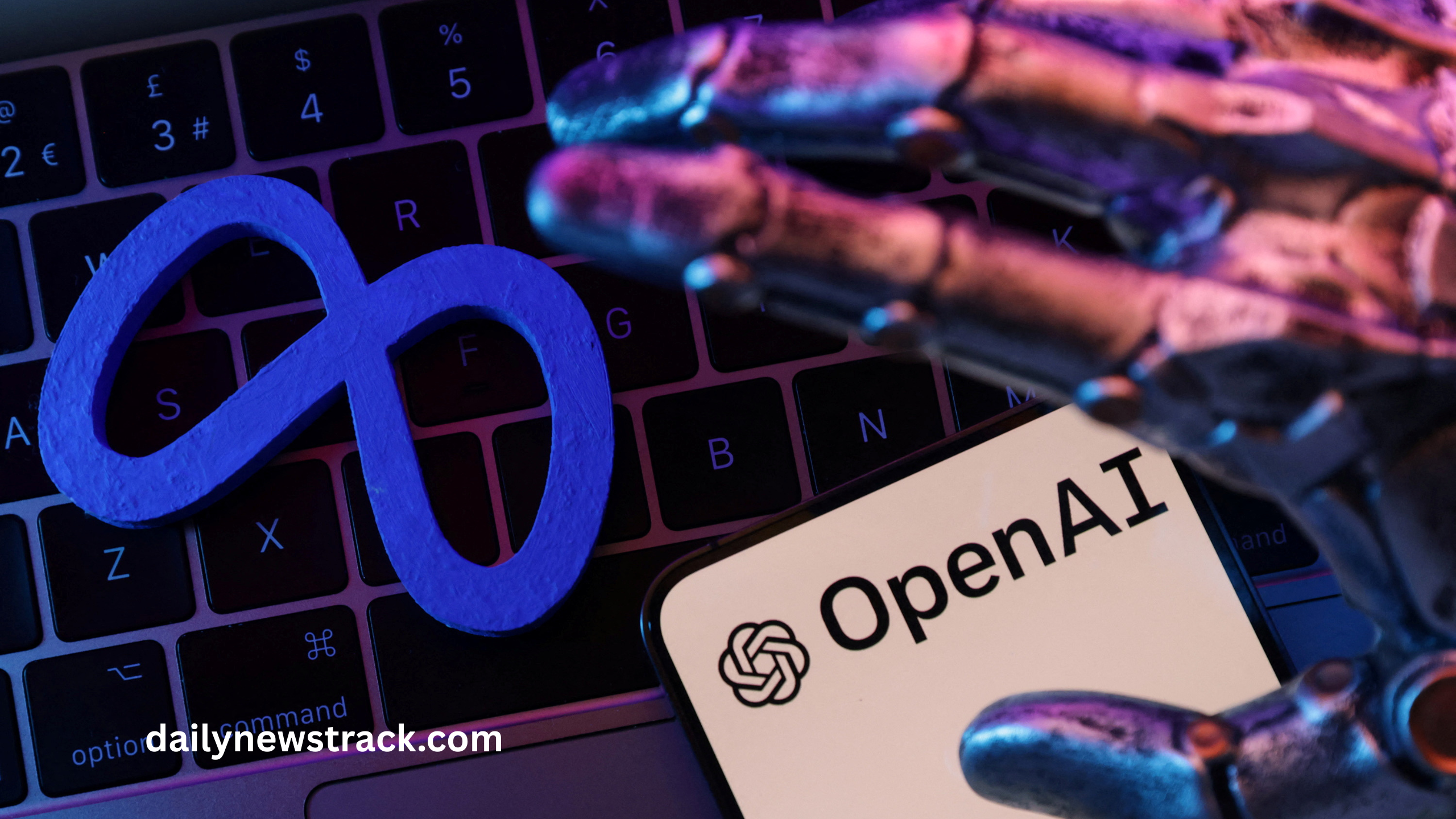
In a striking development within the artificial intelligence industry, Meta has reportedly hired more researchers from OpenAI, according to a report by The Information. This move is the latest in a growing trend of intense competition among tech giants for top AI talent. As companies like Meta, Google, Microsoft, and OpenAI continue to push the boundaries of machine learning, large language models, and generative AI, the demand for elite researchers has skyrocketed.
This article explores the significance of Meta’s recruitment strategy, its implications for OpenAI and the broader tech industry, and how these shifts reflect a larger battle over the future of AI. We’ll explore the motivations behind talent migrations, the challenges of retaining researchers in high-stakes environments, and the ethical questions that arise when groundbreaking technology intersects with corporate interests.
Meta’s Strategic Shift in AI
Meta, formerly Facebook, has long aimed to position itself at the forefront of technological innovation. Under CEO Mark Zuckerberg’s leadership, the company has made significant investments in AI, the metaverse, virtual reality, and neural computing. In recent years, the spotlight has shifted toward generative AI and foundational models — areas where OpenAI has dominated headlines.
The hiring of researchers from OpenAI suggests a deliberate effort by Meta to bolster its own capabilities in large-scale AI models, natural language processing, and deep learning. These hires are not just personnel additions; they are strategic acquisitions of intellectual capital and innovation potential.
Meta’s in-house research division, FAIR (Facebook AI Research), is one of the most advanced AI labs globally. By bringing in researchers with hands-on experience from OpenAI, Meta may be seeking to close the gap with OpenAI’s market leadership, particularly in the development of models akin to GPT-4, ChatGPT, and DALL·E.
The OpenAI Factor
OpenAI has transformed the AI landscape with a series of breakthrough technologies. Its GPT (Generative Pre-trained Transformer) series has redefined what language models can do — from writing code and generating poetry to powering conversational AI.
OpenAI’s rise from a non-profit research lab to a for-profit capped company backed by Microsoft has created tension within the AI research community. Some researchers have raised concerns about OpenAI’s direction, especially around transparency, commercialization, and proprietary research.
This context provides insight into why some researchers might choose to leave OpenAI for Meta. Differences in organizational culture, long-term vision, openness in publication, and equity compensation packages can all influence such decisions.
Moreover, Meta has signaled a commitment to open-source AI development — a stark contrast to OpenAI’s more closed approach following its partnership with Microsoft. For researchers passionate about openness and collaboration, Meta’s environment may be more appealing.
The Talent War in AI
The movement of AI researchers between companies is not uncommon, but it has become more pronounced due to the massive demand for expertise in deep learning, reinforcement learning, and AI safety.
Tech giants now view elite researchers as strategic assets. Compensation packages often include stock options, research freedom, and access to vast computing resources.
This competitive climate is driven by the race to dominate large language models and AI assistants, competition for enterprise and government contracts, investor pressure to stay ahead of rivals, and the need for trusted voices in AI ethics, safety, and regulation.
Meta’s recruitment of OpenAI researchers reflects this global scramble for innovation power.
How the Hires Could Shape Meta’s AI Roadmap
The addition of researchers with OpenAI experience will likely influence Meta’s AI initiatives in several key areas.
Meta is expected to accelerate its development of large language models by leveraging the expertise of those who have already worked on complex systems like GPT-3 and GPT-4. This may lead to more powerful AI assistants, smarter chatbots, and content generation tools that rival existing products.
With multimodal AI systems gaining momentum — combining text, images, video, and audio — these researchers could help refine Meta’s efforts in virtual reality, augmented reality, and interactive metaverse experiences.
As AI safety becomes a pressing issue, Meta may also benefit from knowledge in model alignment and ethical safeguards, an area OpenAI researchers have prioritized.
The high-profile hires could further enhance public and investor perception of Meta’s AI ambitions, adding credibility and signaling a renewed commitment to innovation.
Challenges for Meta
Despite the potential benefits, Meta faces several internal and external challenges as it absorbs new talent and reshapes its AI strategy.
Integrating new researchers into existing teams can be complicated. Balancing academic freedom with corporate product goals requires delicate management and cultural alignment.
Meta’s public image still bears the weight of past controversies over privacy, misinformation, and content moderation. These concerns may color how its AI work is received by regulators, partners, and the public.
The ethical landscape around AI is evolving rapidly. Companies must now justify not only what they build but how they build it. Meta’s open-source AI commitments will be scrutinized as it competes with more closed organizations.
Regulatory pressures are mounting worldwide. Governments in the European Union, United States, and elsewhere are working on comprehensive AI rules. Meta will need to demonstrate compliance and proactive responsibility while continuing to innovate at scale.
What This Means for OpenAI
The departure of researchers can present both logistical and symbolic challenges for OpenAI. While the company still holds a leading position in AI development, high-profile exits may signal deeper tensions.
Some of those tensions include differing views on transparency, the direction of AI commercialization, and how to balance profit with global impact. As OpenAI grows more entangled with corporate partnerships and proprietary software offerings, it may struggle to retain researchers who prefer an academic or open research model.
Yet, OpenAI continues to attract new talent, and departures do not necessarily hinder its momentum. In fact, movement between companies is often seen as a natural cycle within the tech world.
Still, high-profile poaching by rivals like Meta may push OpenAI to rethink its internal culture, compensation structures, and long-term strategy.
Broader Implications for the AI Industry
The movement of researchers between Meta and OpenAI is part of a larger shift in the tech world. AI has become the defining technological frontier, attracting massive capital and global attention.
This has led to a gold rush for AI expertise — not just in tech, but in finance, healthcare, education, and defense. Governments are investing in national AI strategies, startups are raising billions in venture capital, and ethical debates are heating up in universities and boardrooms.
Talent mobility will continue to shape the pace and direction of innovation. As researchers migrate between firms, they carry with them ideas, practices, and philosophies that influence how AI is built and used.
These developments also raise questions about knowledge ownership, intellectual property, and non-compete agreements. Should companies have the power to lock down researchers who want to pursue new opportunities elsewhere? What happens when AI breakthroughs follow individuals instead of staying within the institutions where they were developed?
Frequently Asked Question
Why is Meta hiring researchers from OpenAI?
Meta is strengthening its artificial intelligence capabilities by bringing in experts who have helped develop some of the most advanced AI systems at OpenAI. These hires support Meta’s efforts to compete in the rapidly evolving AI landscape.
What areas of AI are these researchers expected to impact at Meta?
They are likely to contribute to large language models, generative AI, multimodal systems, AI safety, and open-source AI development — areas that are central to Meta’s long-term product and research strategy.
Why might researchers leave OpenAI for Meta?
Researchers may leave OpenAI due to differences in research freedom, organizational structure, compensation, or preferences for open-source collaboration. Some may also align more closely with Meta’s vision for AI deployment.
How does this hiring affect OpenAI?
While OpenAI remains a leader in the AI space, the departure of experienced researchers could signal internal tensions or offer insights into how the AI community views current industry dynamics.
What does this say about the broader AI industry?
The movement of researchers highlights the intense competition for talent in the AI industry. Companies view elite researchers as key to shaping the next generation of AI technology and gaining a competitive edge.
Is Meta focusing on open-source AI?
Yes, Meta has increasingly supported open-source AI models and tools. This stance contrasts with OpenAI’s more closed approach in recent years, especially after partnering with Microsoft.
How will these hires influence Meta’s products?
They may accelerate the development of smarter virtual assistants, immersive metaverse experiences, safer AI tools, and more powerful content generation systems.
What challenges does Meta face in AI development?
Meta must address public trust, privacy concerns, ethical responsibility, regulatory pressures, and the difficulty of integrating new talent into its corporate and research environment.
Are other companies also competing for AI researchers?
Yes, companies like Google DeepMind, Microsoft, Amazon, Anthropic, and numerous startups are all aggressively recruiting AI talent to stay ahead in foundational AI research and commercialization.
What does this mean for the future of AI?
As researchers move between organizations, they bring innovation and fresh ideas. These shifts will continue to shape how AI is developed, who controls it, and how it impacts society at large.
Conclusion
Meta’s recruitment of more OpenAI researchers represents more than a staffing change — it’s a clear signal of the intensifying competition at the heart of the AI revolution. This competition isn’t just about building better chatbots or smarter assistants. It’s about defining the technological, ethical, and societal shape of artificial intelligence for decades to come.