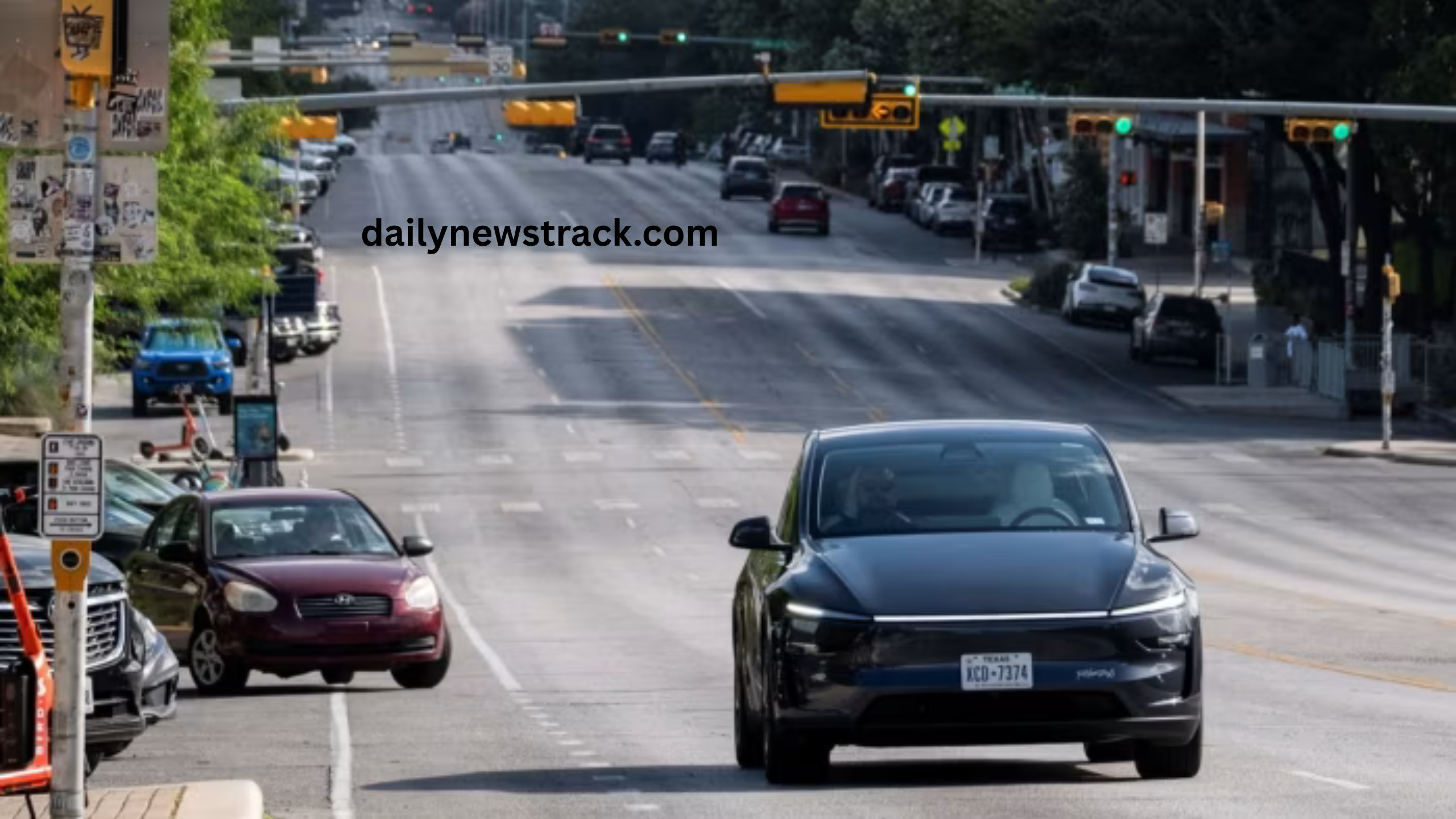
Tesla has long envisioned a world where fully autonomous vehicles redefine the future of transportation. That vision is starting to materialize on the streets of Austin, Texas, where the company has officially launched its pilot Robotaxi program. While the technology has been in development for years, this marks Tesla’s most tangible step yet toward delivering driverless mobility services.
Austin: Ground Zero for Robotaxis
Tesla’s Robotaxi fleet is currently operating in a defined area of Austin. The service is part of a limited early-access program where select users can book rides using a new Tesla Robotaxi app. These users, ranging from influencers to loyal Tesla customers, are experiencing what Tesla believes is the future of urban transportation.
The service is described as “invitation-only” and operates within a geofenced zone. Tesla carefully selected Austin for its combination of tech-savvy residents, relatively favorable traffic patterns, and a supportive local government. Participants report that the app is sleek and simple, providing easy scheduling and real-time updates.
Inside the Robotaxi Ride
While these Robotaxi vehicles appear to drive themselves, a trained Tesla employee currently rides in the passenger seat as a precautionary safety monitor. This individual observes the car’s decisions and can intervene manually if necessary. Tesla has assured users that strict safety measures are in place, including in-vehicle cameras that monitor the safety monitor’s attentiveness.
When faced with unexpected challenges—such as detours, unplanned construction, or pedestrian behavior—the vehicle can also rely on a remote teleoperation center for support. In worst-case scenarios, the Robotaxi will engage a safe fallback maneuver, reducing speed and pulling over to avoid hazards.
Cameras Over Lidar: The Tesla Approach
Unlike many of its competitors in the self-driving space, Tesla’s vehicles rely solely on a vision-based system. Tesla believes that a camera-only approach mimics how human drivers navigate the world and is both cost-effective and scalable. The Full Self-Driving (FSD) platform uses advanced neural networks and Tesla’s in-house chip hardware to power its decisions.
This commitment to avoiding lidar or radar has drawn criticism and praise alike. Proponents argue that Tesla’s approach is more elegant and practical, while skeptics point to safety and redundancy concerns. Nevertheless, Tesla remains firm that cameras and AI software provide the necessary vision and decision-making tools for safe autonomy.
Navigating the Legal Landscape
Tesla’s Robotaxi deployment occurs against a complex and evolving regulatory backdrop. Texas has passed new rules scheduled to go into effect soon that will require companies to meet stringent reporting, transparency, and safety standards. Some lawmakers have voiced concern over Tesla’s early rollout, urging the company to wait until these new regulations are officially enforced.
Federal agencies are also watching closely. The National Highway Traffic Safety Administration (NHTSA) has requested more details on Tesla’s safety protocols and is monitoring the rollout for any incidents or irregularities. Tesla maintains that the program aligns with current laws and that it is working with regulators to ensure full compliance.
A Crowded Arena of Autonomous Ambitions
Tesla is far from the only player in the autonomous driving space. Alphabet’s Waymo, for example, has already launched a driverless ride-hailing service in several cities, including a portion of Austin. Unlike Tesla, Waymo employs lidar, radar, and highly detailed mapping data to navigate streets with no human drivers onboard.
General Motors’ Cruise, Amazon’s Zoox, and Uber’s autonomous division are also investing heavily in this domain. However, Tesla’s camera-only, mass-market approach gives it a unique advantage—and also a unique set of challenges.
Scaling the Unscalable?
Elon Musk has long promised widespread deployment of autonomous vehicles. While past predictions were overly ambitious, Tesla now believes it is ready to scale the Robotaxi program to other cities. The company is already building a pipeline for a dedicated Robotaxi vehicle—referred to as the Cybercab—which will reportedly be smaller, cheaper, and designed from the ground up for autonomy.
Tesla also plans to move beyond limited zones and eventually cover entire urban areas, followed by longer inter-city trips. For now, however, the company is focusing on refining its technology in Austin before expanding the program.
Safety, Trust, and Public Sentiment
Safety is the central concern for both Tesla and the general public. In the past, Tesla’s Full Self-Driving feature has faced scrutiny following crashes and near-misses. Critics, including safety advocacy groups, warn that Tesla’s approach could be risky without lidar or other backup sensors.
However, early participants in Austin have largely praised the Robotaxi experience. Some describe it as smooth and futuristic, noting the absence of a driver as both eerie and exciting. Still, trust will take time to build, especially in a world where headlines about autonomous mishaps quickly go viral.
Tesla is aware of this delicate balance. The company has increased public communication, opened its systems to more transparency, and is gathering real-time data to strengthen its models. Tesla believes that once people experience autonomy firsthand, their concerns will be replaced by awe.
Financial Implications and Market Position
From a financial perspective, Tesla’s move into robotaxis could fundamentally change its business model. Rather than relying solely on vehicle sales, the company can generate recurring revenue through mobility-as-a-service (MaaS). The Robotaxi network, if scaled successfully, could position Tesla as both a hardware and software provider for urban transportation.
Wall Street analysts are cautiously optimistic. Some view the Robotaxi service as a potential trillion-dollar opportunity, while others remain wary of regulatory hurdles, safety concerns, and the sheer difficulty of scaling autonomous driving.
A Cultural and Social Transformation
Beyond financials and technology, Tesla’s Robotaxi program could have sweeping societal impacts. Mass adoption of autonomous ride services might reduce car ownership, transform urban planning, and reduce traffic accidents. It may also create new questions about labor, as traditional driving jobs face disruption.
If Tesla’s vision holds true, cities may begin to redesign their infrastructure for robotaxis: smart intersections, dedicated pickup/drop-off zones, and charging hubs could become the new normal. These changes could lead to cleaner, quieter, and more efficient cities—but only if safety, accessibility, and equity are kept front and center.
What Comes Next
In the coming months, all eyes will remain on Austin. Tesla’s Robotaxi program serves as a real-world test for how well the technology performs, how the public responds, and how regulators react. Every ride, every data point, and every incident will inform the next phase of Tesla’s autonomous ambitions.
Tesla is expected to expand the trial program, perhaps removing the safety monitor in later phases and increasing the fleet size. Updates to the Robotaxi app, AI stack improvements, and new regulatory filings are all anticipated. The company may also begin trial operations in other Texan cities before launching in California or Nevada.
Frequently Asked Question
What is Tesla’s Robotaxi program?
Tesla’s Robotaxi program is an autonomous ride-hailing service where self-driving Tesla vehicles operate without a driver, currently in a controlled pilot phase in Austin, Texas.
Where is the Robotaxi service currently available?
The service is currently operating within a limited, geofenced area in Austin, Texas, specifically selected for initial testing.
Who can use the Robotaxi service right now?
As of now, the service is invitation-only and available to a small group of selected users, including Tesla supporters, influencers, and early testers.
Is there a human driver in the vehicle?
No human driver is present in the driver’s seat, but a Tesla safety monitor currently sits in the passenger seat during the trial for oversight and safety assurance.
How do the Robotaxis navigate without a driver?
Tesla uses a camera-based Full Self-Driving system powered by AI and neural networks. Unlike competitors, Tesla does not rely on lidar or radar for navigation.
Is the Robotaxi service safe?
Tesla states that the Robotaxi includes multiple safety features such as real-time monitoring, teleoperation backup, and emergency protocols. However, it is still under regulatory review and public testing.
How do I book a Tesla Robotaxi ride?
Participants use a dedicated Robotaxi mobile app to schedule rides. The app is different from the standard Tesla app used for personal vehicle management.
How much does a ride cost?
During the pilot phase, rides are priced at a flat promotional fare, though pricing may change once the service scales to the public.
What is the purpose of this trial?
The trial helps Tesla gather real-world data, validate its Full Self-Driving software, refine user experience, and demonstrate safety before a broader rollout.
Will the Robotaxi expand to other cities?
Tesla plans to expand the service to more cities in the future, depending on the success of the Austin trial and regulatory approval in other regions.
Conclusion
Tesla’s Robotaxi program in Texas is more than just a product launch—it is a significant step in the evolution of mobility. By combining ambitious technology with practical rollout strategies, Tesla is inching closer to a driverless future. Challenges remain, including safety validation, regulatory acceptance, and public trust, but the journey has undeniably begun.