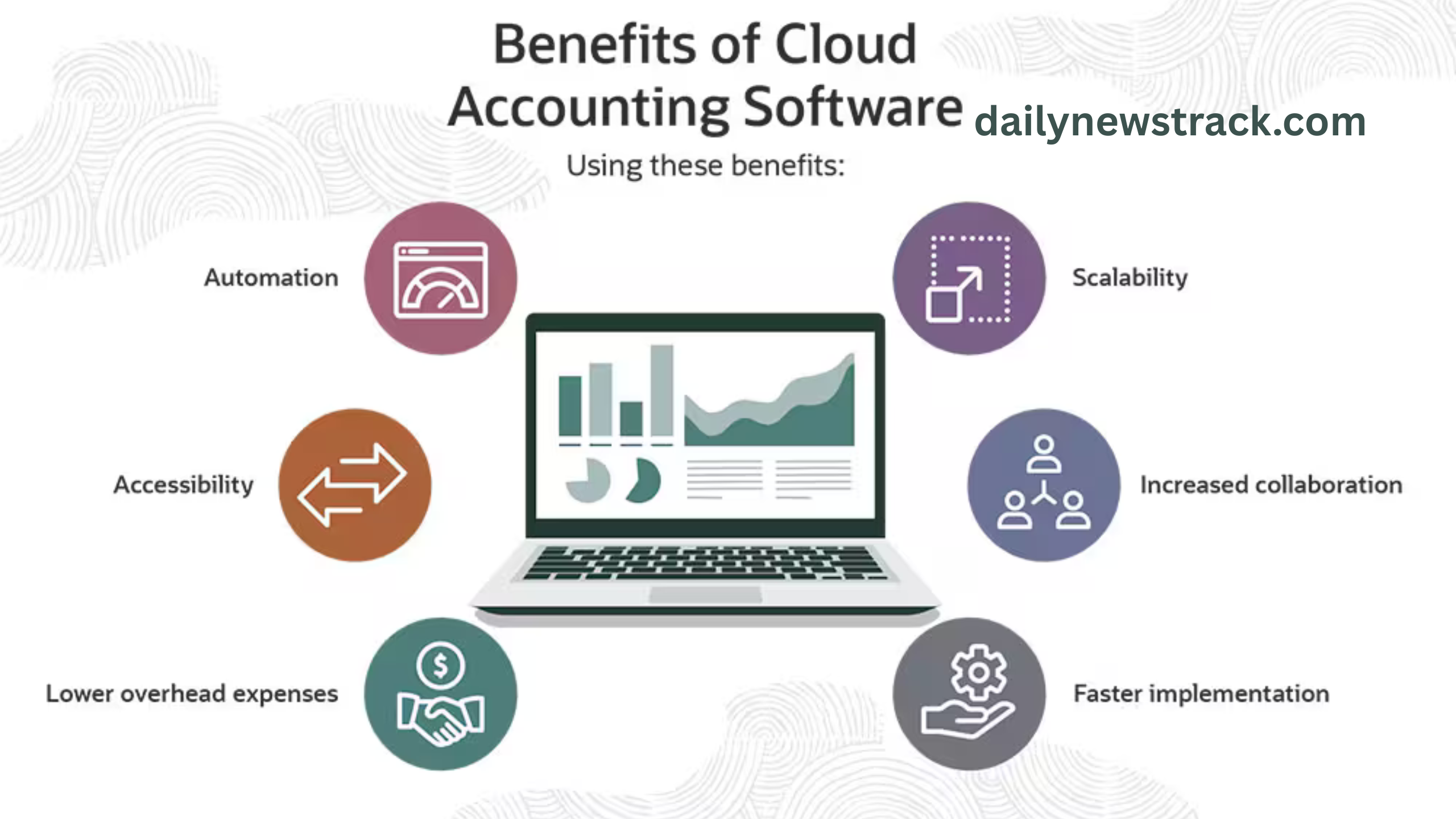
Accounting has undergone a major transformation in the digital age. Once dominated by paper ledgers, spreadsheets, and desktop tools, today’s businesses are moving toward smarter, faster, and more efficient systems. Cloud-based accounting software is leading this transformation, offering a dynamic solution that enhances financial transparency, supports remote work, and streamlines complex tasks.
This article explores the key benefits of using cloud-based accounting platforms and how they help businesses achieve greater accuracy, efficiency, and agility. Whether you’re a freelancer, startup founder, or CFO of a growing company, understanding the advantages of cloud accounting is essential to staying competitive in the modern marketplace.
Access Your Financials Anytime, Anywhere
One of the most significant benefits of cloud accounting software is its accessibility. Unlike traditional software that ties you to a specific computer, cloud solutions are web-based. This means you can access your data from any device with an internet connection—laptop, tablet, or smartphone.
Cloud platforms empower remote teams and on-the-go professionals. You can issue invoices, review cash flow, and reconcile transactions while traveling or working from home. Business doesn’t have to stop just because you’re not in the office. This real-time access helps keep operations smooth, even across different time zones.
Collaborate with Your Team in Real Time
Traditional accounting systems often limit access to one or two users and require manual backups for collaboration. With cloud-based software, collaboration becomes seamless. Multiple users can log in simultaneously, review financials, and make updates in real time.
This improves coordination between accountants, finance teams, and business owners. Your bookkeeper can update payroll while your accountant prepares quarterly reports, all from separate locations. Audit trails and role-based permissions ensure that everyone sees only what they need to, keeping data secure while improving team productivity.
Get Real-Time Financial Insights
Staying on top of your business’s financial health is easier with cloud accounting. Because the system updates in real time, every transaction you input or sync is instantly reflected across reports, dashboards, and summaries.
This enables better decision-making. If your expenses suddenly increase, you’ll see it right away. If a client pays an overdue invoice, your cash flow report updates instantly. With this level of visibility, businesses can react quickly, reduce financial risks, and forecast more accurately.
Automate Tedious Accounting Tasks
Cloud accounting platforms come equipped with powerful automation features. These help eliminate manual tasks that consume hours each week—like data entry, bank reconciliations, invoicing, and payroll processing.
Recurring invoices can be scheduled automatically. Bank transactions can be linked for auto-reconciliation. Payroll can be calculated, filed, and paid on time without human input. This reduces errors and frees up valuable time, allowing teams to focus on strategy and growth rather than routine work.
Improve Accuracy and Reduce Human Error
Manual accounting leaves room for mistakes—incorrect formulas in spreadsheets, missed entries, or forgotten updates. Cloud software automates calculations and links directly to bank feeds, significantly reducing the likelihood of error.
Built-in validation tools check for inconsistencies and alert users before issues escalate. Regular backups ensure data integrity, and most platforms include audit trails, so you can see what changes were made and by whom. This improves accuracy and accountability across the board.
Scale Easily as Your Business Grows
Small businesses evolve quickly. What works for a team of two might not work for a team of twenty. Cloud-based software is designed to scale with your needs. You can start with basic functions like invoicing and bookkeeping, then expand into advanced modules like inventory management, multi-currency accounting, or tax automation.
You don’t need to install new hardware or buy costly licenses. Simply upgrade your plan or activate new features within the same platform. This scalability makes cloud solutions ideal for growing startups and established enterprises alike.
Strengthen Your Data Security
One common concern about cloud systems is security. In truth, cloud-based accounting software is often more secure than traditional desktop solutions. Reputable providers use bank-grade encryption, firewalls, and multi-factor authentication to keep your data safe.
Additionally, cloud software performs automatic backups and stores data in multiple redundant locations. If your laptop is stolen or damaged, your financial data is still safe in the cloud. You can log in from a new device and pick up right where you left off.
Ensure Compliance and Reduce Audit Risks
Staying compliant with tax regulations and financial laws is critical. Many cloud-based accounting platforms come preloaded with tools that help meet local and international compliance requirements.
For instance, you can generate audit-ready reports with a click, automate tax calculations, and submit filings electronically. With accurate records and traceable audit logs, your business is better prepared for government reviews, investor checks, and end-of-year reporting.
Save Money and Reduce Operational Costs
Traditional accounting tools often require costly installation, maintenance, and upgrades. Cloud platforms typically use a subscription-based pricing model, meaning you only pay for what you use.
You don’t need an IT team to manage servers, and you avoid large upfront software costs. Automatic updates are included, so your system stays current without downtime or added expenses. By reducing overhead and improving efficiency, cloud software helps businesses save money in the long run.
Integrate with Other Business Tools
Most cloud accounting software integrates seamlessly with other digital tools—like CRM platforms, e-commerce stores, payroll systems, and inventory management apps. These integrations simplify workflows and centralize data.
For example, when a customer places an order through your online store, it can automatically create a sales entry in your accounting system. When an employee submits an expense report, it flows directly into your ledger. This connectivity streamlines operations and reduces manual work.
Access Advanced Analytics and Reporting
Modern cloud accounting solutions go beyond bookkeeping. They provide advanced analytics and customizable reporting tools that help you understand trends, measure performance, and identify opportunities.
You can track KPIs like profit margins, burn rate, sales performance, and customer lifetime value. Interactive dashboards and visual graphs make complex data easy to interpret. With this level of insight, businesses can optimize spending, invest smarter, and plan for long-term growth.
Support for Remote and Hybrid Workforces
As remote and hybrid work models become more common, cloud-based tools are no longer optional—they’re essential. Cloud accounting ensures that finance departments can operate efficiently without being tied to a physical office.
Teams can collaborate securely from different locations, share documents, manage payroll, and maintain financial control—no matter where they’re based. This flexibility is especially important in today’s unpredictable business landscape.
Reduce Paperwork and Embrace Digital Transformation
Cloud accounting aligns with broader trends toward sustainability and digital transformation. By digitizing invoices, receipts, tax forms, and financial statements, businesses reduce their reliance on paper.
Not only does this help the environment, but it also creates a more organized and efficient back-office. Documents are easier to search, share, and store. Cloud tools also allow for e-signatures and digital approvals, further reducing the need for physical paperwork.
Provide Better Service to Clients and Customers
Timely billing, easy payments, and accurate communication all contribute to a better customer experience. Cloud platforms often offer features like branded invoices, automated payment reminders, and online payment gateways.
Customers can pay with a click, view transaction history, or download receipts instantly. This level of convenience builds trust and encourages timely payments—an important factor in maintaining healthy cash flow.
Receive Regular Software Updates
One often overlooked benefit of cloud-based accounting software is that updates are automatic and included. There’s no need to manually install patches or pay extra for new versions.
Developers frequently release new features, improve performance, and address security issues. This means your system is always up to date with the latest tax rates, compliance standards, and technological innovations—without any disruption to your workflow.
Eco-Friendly and Sustainable
By moving your financial operations online, you significantly reduce your company’s carbon footprint. Fewer physical documents, less office energy usage, and reduced hardware requirements contribute to a greener approach to business.
This shift is not only good for the planet but also resonates well with environmentally conscious stakeholders and customers. A commitment to sustainability can become a positive part of your brand identity.
Easier Disaster Recovery
Natural disasters, hardware failures, and cyberattacks can severely disrupt traditional accounting systems. Cloud software minimizes these risks by storing data offsite and maintaining multiple backups.
If your local systems fail, your financial data remains safe and accessible online. Recovery is quick and painless—simply log in from a new device and resume operations. This ensures continuity and protects against catastrophic data loss.
Gain Competitive Advantage
Businesses that embrace cloud technology often outperform those that don’t. With faster reporting, more accurate data, and greater agility, companies can respond quickly to market changes and customer needs.
Cloud accounting equips your team with tools to make smarter decisions, avoid costly errors, and optimize performance. In today’s competitive environment, that edge can make all the difference.
Frequently Asked Questions
What is cloud-based accounting software?
Cloud-based accounting software is an online financial management tool that allows users to access and manage their business finances over the internet. Unlike traditional desktop software, it runs on remote servers and can be accessed from any device with an internet connection.
Is cloud accounting secure?
Yes. Reputable cloud accounting providers use advanced security measures such as encryption, firewalls, secure data centers, and multi-factor authentication to protect your financial data. Data is also backed up regularly to prevent loss.
How is cloud accounting different from traditional accounting software?
Traditional software is usually installed on a single computer and requires manual backups and updates. Cloud accounting is web-based, offers real-time data access, automatic updates, and allows multiple users to collaborate simultaneously from different locations.
Can I access cloud accounting software from my mobile phone?
Yes. Most cloud accounting platforms have mobile apps or mobile-optimized versions that allow you to view reports, send invoices, and track expenses from your smartphone or tablet.
Is cloud accounting suitable for small businesses?
Absolutely. Cloud accounting is ideal for small businesses due to its affordability, ease of use, and scalability. You can start with basic features and upgrade as your business grows.
What are the main benefits of using cloud-based accounting?
Key benefits include:
- Real-time financial insights
- Automated invoicing and reporting
- Anywhere access
- Better data security
- Scalability
- Cost savings
- Easier collaboration with your accountant
Do I need technical skills to use cloud accounting?
No. Most cloud accounting platforms are user-friendly and designed for non-accountants. Support resources, tutorials, and customer service are usually available to help users learn the system quickly.
Can multiple users access the same cloud accounting account?
Yes. You can set up multiple users with customized access permissions. This enables different team members (e.g., accountants, finance managers, and business owners) to work on the same data simultaneously.
Does cloud accounting software work offline?
No. Cloud accounting requires an internet connection to access and update financial data. However, some platforms offer limited offline capabilities or mobile apps that sync when reconnected.
How much does cloud-based accounting software cost?
Costs vary depending on the provider and features you need. Most platforms offer monthly subscription plans ranging from entry-level to advanced tiers, allowing you to choose what fits your business and budget.
Conclusion
Cloud-based accounting software is more than just a trend—it’s a fundamental shift in how businesses manage their finances. From improved accuracy and automation to real-time collaboration and data security, the benefits are numerous and far-reaching.